Below are our basic tips for how to care for each type of plant we sell:
Venus Flytrap (Dionaea)
Keep soil damp at all times.Leave pots in a shallow tray or saucer of
water.
Use rain water, distilled water, or tap water
with low mineral content (like Hetch Hetchy water in the SF Bay Area.)If you use bottled water, make sure that it
has NO sodium added.
DO NOT fertilize your flytraps with traditional
fertilizers.Flytraps get their
nutrients from the sun and insects, and their root systems are sensitive to
fertilizers.
Grow your flytraps in as much sun as possible.They can be grown outside in most
climates.If grown indoors, they should
be in the sunniest location possible or under fluorescent lights.
Flytraps are perennials.They flower and grow in spring and summer,
and will stop growing or go dormant in winter.If your flytrap appears to be completely dead in winter, keep the soil
moist and it will probably re-emerge from its roots in spring with larger
growth.
Transplant every few years in a mix of 50% peat
moss and 50% sand or perlite.This is best
done during winter dormancy.Make sure
there is no fertilizer in the soil you use.
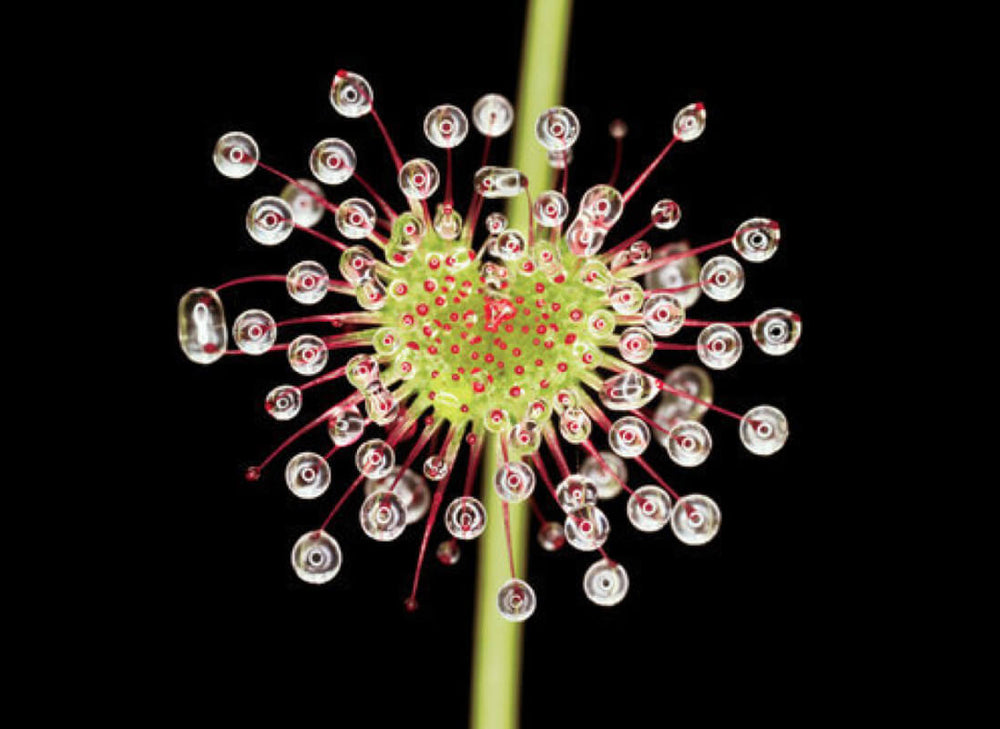
Sundew (Drosera) - Temperate Varieties
Keep soil damp at all times.Leave pots in a shallow tray or saucer of
water.
Use rain water, distilled water, or tap water
with low mineral content (like Hetch Hetchy water in the SF Bay Area.)If you use bottled water, make sure that it
has NO sodium added.
DO NOT fertilize your sundews with traditional
fertilizers.Sundews get their nutrients
from the sun and insects, and their root systems are very sensitive to
fertilizers.
Grow your sundew in sunny to partly-sunny
conditions.They can be grown outside in
most climates, on a sunny windowsill, or under fluorescent lights.
Sundews are perennials.They flower and grow in spring and summer,
and will slow down or stop growing in winter.
Sundews may go dormant if the weather becomes
too cold or the plant is stressed.If your
sundew appears to be completely dead while grown outside in winter, keep the
soil damp, and it will probably re-emerge from its roots in spring.
Transplant every few years in a mix of 50% peat
moss and 50% sand or perlite.This is
best done during winter.Make sure there
is no fertilizer in the soil you use.
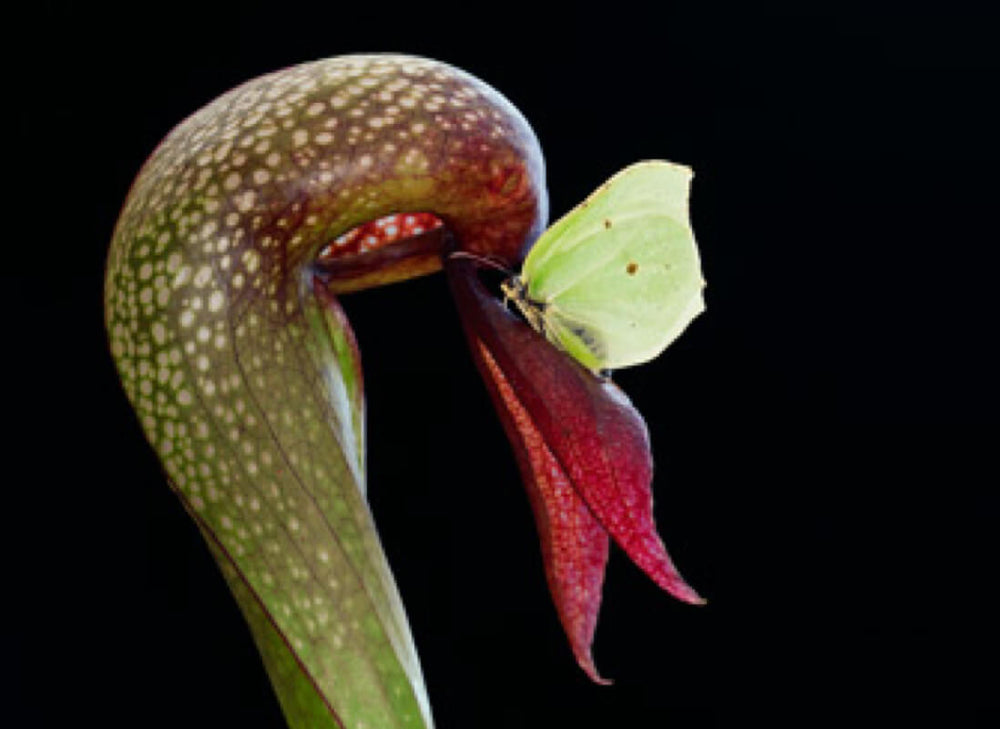
American Pitcher Plant (Sarracenia)
Keep soil damp at all times.Leave pots in a shallow tray or saucer of water.
Use rain water, distilled water, or tap water
with low mineral content (like Hetch Hetchy water in the SF Bay Area.)If you use bottled water, make sure that it
has NO sodium added.
DO NOT fertilize sarracenia with traditional
fertilizers.Sarracenia get their
nutrients from the sun and insects, and their root systems are sensitive to
fertilizers.
Grow your sarracenia in as much sun as possible.They can be grown outside in most
climates.Due to their high light
requirement, they are unlikely to thrive indoors, and because of their height,
they are difficult to grow under fluorescent lights.
Sarracenia are perennials.They flower and grow in spring and summer,
and will stop growing or go dormant in winter.If your sarracenia appears to be completely dead in winter, keep the
soil moist and it will probably re-emerge from its roots in spring with larger
and more colorful growth.
Transplant every few years in a mix of 50% peat
moss and 50% sand or perlite.This is
best done during dormancy.Make sure
there is no fertilizer in the soil you use.
Butterwort (Pinguicula) - Temperate Varieties
Keep soil damp at all times.Leave pots in a shallow tray or saucer of
water.
Use rain water, distilled water, or tap water
with low mineral content (like Hetch Hetchy water in the SF Bay Area.)If you use bottled water, make sure that it
has NO sodium added.
DO NOT fertilize your butterworts with
traditional fertilizers.Butterworts get
their nutrients from the sun and insects, and their root systems are very
sensitive to fertilizers.
Grow your butterwort in partly-sunny
conditions.They can be grown outside in
most climates, on a sunny windowsill, or under fluorescent lights.
Butterworts are perennials.They flower and grow in spring and summer,
and will slow-down or stop growing in winter.
Transplant every few years in a mix of 50% peat
moss and 50% sand or perlite.This is
best done during winter.Make sure there
is no fertilizer in the soil you use.
Keep soil damp but well-drained at all
times.DO NOT let your nepenthes sit in
water.
Use rain water, distilled water, or tap water
with low mineral content (like Hetch Hetchy water in the SF Bay Area.)If you use bottled water, make sure that it
has NO sodium added.
Grow your nepenthes in partly-sunny
conditions.They can be grown outside
during warm weather, but should be kept above 50⁰ F.
Nepenthes can also be grown on sunny windowsills
or in terrariums under fluorescent lights.
Nepenthes prefer high humidity.If you live in a dry area or if you grow them
indoors, mist regularly with pure water.
Nepenthes respond well to foliar
fertilization.Spray twice monthly
during the growing season with a 50% solution orchid or epiphyte fertilizer.
Transplant ever few years in a light, airy
mixture.We use equal parts sphagnum
moss, pearlite, vermiculite, and fine orchid bark.This is best done in winter.